Matheus Nunes Speaks Candidly on His New Role at Manchester City Under Pep Guardiola
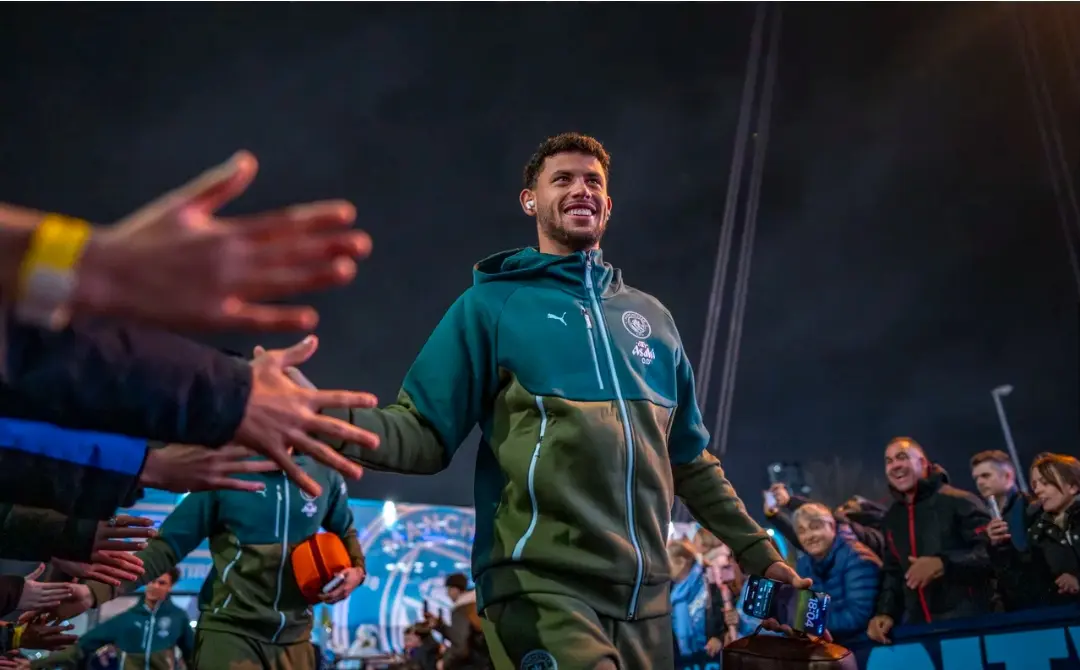
Matheus Nunes has shared honest insights into his evolving role at Manchester City, after being redeployed from midfield to right-back by manager Pep Guardiola. The Portuguese international has emerged as one of the most fascinating tactical stories of City’s season, adapting quickly to a demanding position during a period of transition for the club.
Following the departure of Kyle Walker and uncertainty over a long-term replacement, Guardiola has once again turned to his trusted philosophy of positional flexibility. Rather than rushing into the transfer market, City have relied on intelligent, technically gifted players to fill key gaps, with Nunes stepping up at a crucial moment in the campaign.
The shift has come during a congested fixture schedule, with Manchester City competing across multiple competitions. Guardiola’s system places heavy responsibility on full-backs, requiring them to defend aggressively, support attacks, and move fluidly into central areas. Nunes’ athleticism, composure, and tactical awareness have allowed him to quickly establish himself as a reliable option on the right side of defence.
Although the club continues to monitor potential external reinforcements such as Tino Livramento and other European prospects, Nunes’ consistent performances have provided sporting director Hugo Viana and Guardiola with valuable breathing room. His adaptability has reduced the urgency to make immediate signings, allowing City to focus on long-term planning rather than short-term fixes.
Speaking to ManCity.com, Nunes explained that the positional change has challenged him in new ways. He highlighted how full-back is one of the most difficult roles in modern football, as players are often tasked with stopping the opposition’s most dangerous attackers while maintaining tactical discipline throughout the match.
The 27-year-old also revealed that the defensive responsibilities differ significantly from those of a midfielder. Constant awareness, positional discipline, and covering multiple zones are now essential parts of his game. Despite the challenges, Nunes admitted that the variety and complexity of the role have helped him grow as a player.
Beyond individual development, Nunes’ transformation reflects Guardiola’s broader philosophy at Manchester City. The modern full-back in his system must be versatile, intelligent, and comfortable in multiple roles, often drifting into midfield or forming part of a back three during build-up play. This tactical evolution continues to define City’s dominance at the highest level.
As the season progresses, Nunes’ performances could play a key role in shaping City’s transfer strategy. If he continues to deliver at a high level, the club may choose patience over urgency, ensuring any future signing fits perfectly into Guardiola’s system.
Frequently Asked Questions (FAQ)
Why is Matheus Nunes playing at right-back?
Pep Guardiola values versatility and has trusted Nunes to adapt after Kyle Walker’s departure, rather than immediately signing a replacement.
Does Nunes enjoy playing as a full-back?
Yes. Nunes has stated that he enjoys the challenge, variety, and tactical demands of the position, even though it is very different from midfield.
Is Matheus Nunes a long-term solution at right-back?
That remains unclear. While he has performed well, Manchester City are still monitoring the transfer market for specialist options.
How does this role help Nunes develop?
Playing at right-back improves his defensive awareness, positioning, and tactical understanding, making him a more complete player.
Conclusion
Matheus Nunes’ openness about his new role highlights both his professionalism and Pep Guardiola’s trust in adaptable players. While questions remain about Manchester City’s long-term plans at right-back, Nunes’ performances have shown that internal solutions can be just as effective as expensive signings. For now, his evolution stands as another example of Guardiola’s tactical brilliance and City’s ability to adapt without losing momentum.